
Blog
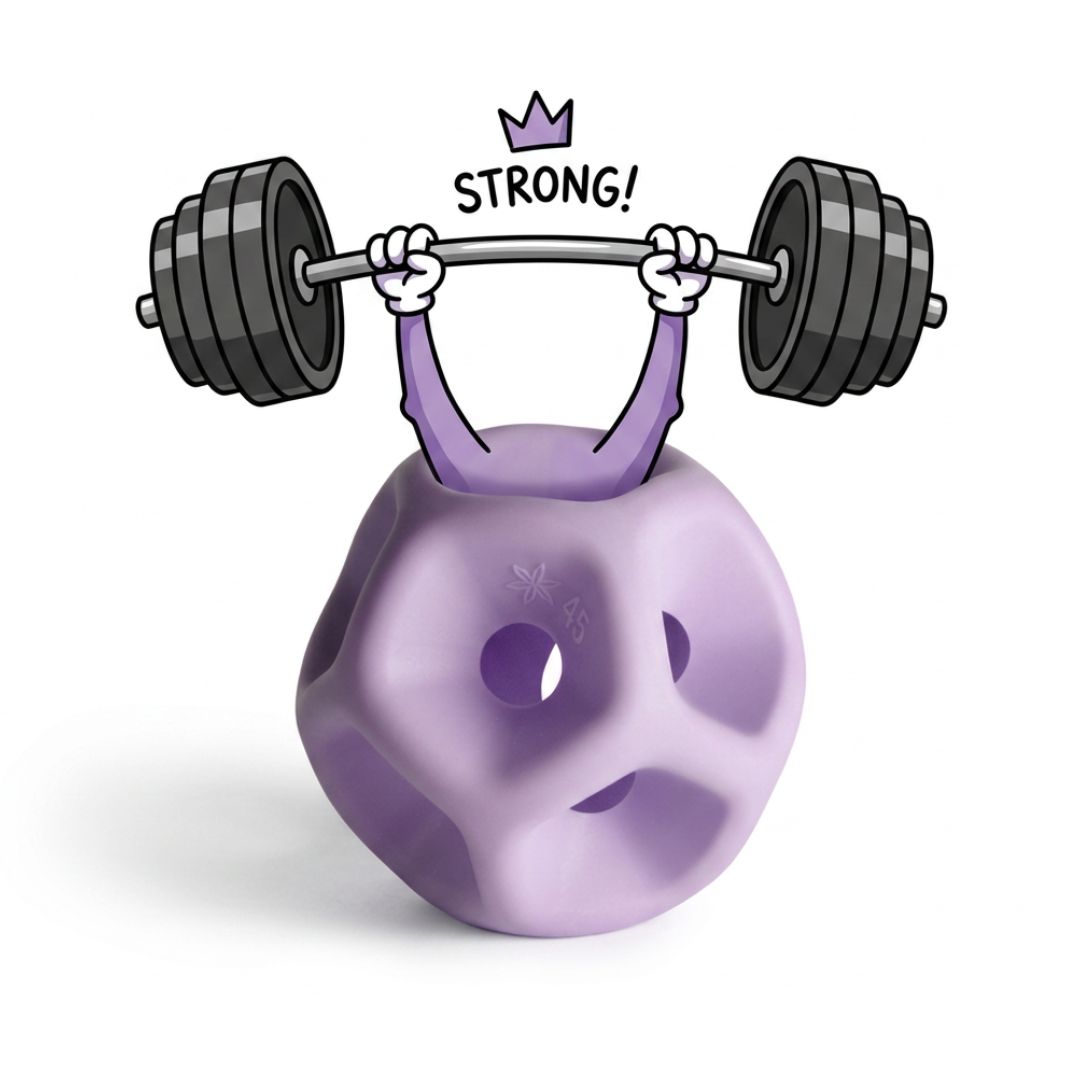
Calling All Active Women –
How Soma Flex Can Help Improve Pelvic Floor Dysfunction in Strength Training
Pelvic floor dysfunction (PFD) affects women across all life stages, yet remains widely under‑discussed — particularly in athletic populations. Despite growing participation in strength sports such as powerlifting and Olympic weightlifting, pelvic floor muscle training (PFMT) is still not routinely included in strength training protocols, and many coaches report they do not know how to teach effective PFMT. This gap leaves athletes vulnerable to symptoms such as urinary incontinence (UI), heaviness, and impaired pelvic control during high‑load lifts.
Soma Flex was designed to bridge this gap: a responsive, sustainable proprioceptive tool that supports pelvic floor awareness, activation, and coordination — the foundations of pelvic floor health in both daily life and high‑performance sport.
This article explores the evidence, the challenges, and the role Soma Flex can play in improving pelvic floor function and adherence in active women.
Pelvic Floor Dysfunction in Strength Athletes: What the Evidence Shows
A growing body of research highlights a clear relationship between heavy lifting and pelvic floor symptoms — particularly urinary incontinence.
Prevalence
A recent systematic review of 221 articles identified 5 high‑quality studies (1,809 participants). Findings showed:
- Power lifters: UI prevalence 41.0%–48.8%
- Weightlifters: UI prevalence 36.6%–54.1%
- Deadlift was the exercise most associated with UI (42.5%)
- Squats followed closely (36.3%)
High loads, high repetitions, and competition environments increased symptom likelihood
These numbers are striking — especially considering that many athletes are young, fit, and highly trained.
Associated factors
Across studies, the most consistent contributors were:
- Age
- Parity
- Higher BMI
However, even nulliparous athletes report symptoms, suggesting that load‑related pressure management, not just obstetric history, plays a key role.
Knowledge matters
One study found that higher pelvic floor knowledge correlated with lower PFD prevalence, highlighting the importance of athlete education — an area where Soma Flex can play a meaningful role.
Heavy Lifting and Pelvic Organ Support: What We Know (and Don’t Know)
The relationship between heavy lifting and pelvic organ prolapse (POP) is complex.
Key findings from recent research
In asymptomatic, trained, premenopausal, vaginally parous women (having given birth to one or more children), a single heavy lifting session produced small, immediate pelvic floor morphometric changes, but no meaningful compromise to bladder neck, rectal ampulla, or vaginal wall support.
A doctoral thesis examining heavy lifting and POP concluded that exercise‑based heavy lifting does not compromise pelvic organ support in women without symptoms of vaginal bulge.
However, the effect of chronic heavy lifting on pelvic organ support remains insufficiently understood.
While heavy lifting may not directly cause POP in asymptomatic women, it does increase the risk of UI, especially in athletes who cannot coordinate their pelvic floor during high‑pressure tasks.
This is where proprioception, breath coordination, and pre‑contraction strategies become essential — and where Soma Flex offers a unique advantage.
The Adherence Problem: Why Pelvic Floor Training Fails for Many Women
Pelvic floor muscle training (PFMT) is the gold‑standard first‑line intervention for UI and POP symptoms. Yet adherence rates are notoriously low:
Pelvic floor adherence ranges from 40–80%
This variability is driven by:
- Difficulty sensing the pelvic floor
- Uncertainty about correct technique
- Lack of feedback
- Low confidence
- Boredom or lack of perceived progress
- No integration into athletic training
For athletes, the problem is amplified: PFMT often feels disconnected from their training identity, lacks clear performance relevance, and provides no immediate sensory feedback. Soma Flex directly addresses these barriers.
How Soma Flex Supports Pelvic Floor Function
Soma Flex is not a strengthening device — it is a proprioceptive awareness tool designed to improve:
- Sensory mapping
- Breath–pelvic floor coordination
- Reflexive activation
- Release capacity
- Load‑responsive control
These are the foundations of pelvic floor function in both daily life and high‑performance lifting.
Enhancing tactile awareness
Tactile input increases sensory stimulation, helping the brain:
- Locate the pelvic floor
- Differentiate lift vs. grip
- Sense release vs. bearing down
- Improve neuromuscular coordination
This is essential for athletes who struggle to “feel” their pelvic floor during heavy lifts.
Supporting breath‑pressure coordination
The diaphragm and pelvic floor work as a unit. Soma Flex helps athletes:
- Sense pelvic floor descent on inhale
- Sense recoil on exhale
- Avoid breath‑holding and bracing patterns that increase downward pressure
- Build pre‑contraction strategies before heavy lifts
This is critical for managing intra‑abdominal pressure (IAP) during squats, deadlifts, and Olympic lifts.
Improving reflexive activation
Athletes need timed, not maximal, pelvic floor activation.
Soma Flex helps retrain:
- Pre‑lift activation
- Coordination during bracing
- Release after exertion
- Automatic responses during dynamic movement
Reducing over‑recruitment with increased somatosensory input
Many athletes have hypertonic pelvic floors due to chronic bracing.
Soma Flex responsive trainer could enhance sensory feedback and proprioception training support:
- Down‑training
- Tissue softening
- Nervous system regulation
- Improved range of motion
- This reduces symptoms such as heaviness, urgency, and pain.
Soma Flex is worn comfortably in the vagina and could improve adherence by providing:
- Immediate sensory feedback
- A clear “felt sense” of progress
- A structured, guided experience
- A tool that integrates easily into warm‑ups or recovery sessions
- A sense of purpose and embodiment
Athletes are more likely to engage with PFMT when it feels practical, measurable, and relevant to performance.
Why Soma Flex could Matter for Strength Training in Athletes
Strength athletes face unique pelvic floor demands:
- High intra‑abdominal pressure
- Repetitive heavy loading
- Rapid pressure changes during Olympic lifts
- Competition‑induced stress
- High training volume
Soma Flex may help athletes build the foundational pelvic control needed to tolerate these loads safely.
- Potential benefits for athletes
- Reduced urinary incontinence
- Improved pressure management
- Better bracing mechanics
- Enhanced proprioception
- Reduced fear of symptoms
- Increased confidence under load
- Improved performance through better core synergy
Some studies even show that athletes who can activate their pelvic floor during lifting experience improved symptoms, not worsening — highlighting the importance of neuromuscular control.
The Future: Integrating Soma Flex into Athletic Training Protocols
Given the evidence, there is a clear need for:
- Pelvic floor education in strength sports
- Coach training on PFMT principles
- Tools that support awareness and adherence
- Research on proprioceptive devices like Soma Flex
- Studies on pre‑contraction strategies during heavy lifts
Soma Flex is uniquely positioned to support this evolution by offering:
- A non‑threatening, sustainable, reusable tool
- A proprioceptive anchor for breath and activation
- A bridge between clinical rehab and athletic performance
- A method for improving adherence in a population that struggles with traditional PFMT
Conclusion
Pelvic floor dysfunction is common among women in powerlifting and weightlifting, with urinary incontinence affecting up to half of athletes. While heavy lifting does not appear to compromise pelvic organ support in asymptomatic women, it does challenge pressure management and neuromuscular coordination — especially in those without pelvic floor awareness.
Soma Flex offers a clinically grounded, athlete‑friendly solution by improving tactile awareness, breath coordination, reflexive activation, and adherence. It empowers women to understand, feel, and control their pelvic floor — not just in the clinic, but under the barbell.
As participation in strength sports continues to grow, tools like Soma Flex will play an essential role in bridging the gap between pelvic health and performance.
Alves, A.S.C., de Araújo, M.P., Pereira, G.M.V. et al. Influence of Powerlifting and Weightlifting on Female Pelvic Floor Dysfunction: Systematic Literature Review. Int Urogynecol J 36, 955–964 (2025). https://doi.org/10.1007/s00192-025-06059-4
Bø, K., Lillegård, R.H. & Skaug, K.L. Pelvic Floor Muscle Training on Stress Urinary Incontinence in Power- and Weightlifters: a Pilot Study. Int Urogynecol J 35, 1291–1298 (2024). https://doi.org/10.1007/s00192-024-05801-8
Forner, L.B., Cyr, MP., Beckman, E.M. et al. The Immediate Impact of Heavy Weightlifting on Pelvic Floor Morphometry in Vaginally Parous Women: A Repeated Measures Study. Int Urogynecol J (2026). https://doi.org/10.1007/s00192-026-06772-8
Forner, Lori (2025). Towards better understanding of pelvic organ support in women who engage in recreational exercise: The effects of heavy lifting on the pelvic floor. PhD Thesis, School of Health and Rehabilitation Sciences, The University of Queensland.https://doi.org/10.14264/07fb8ac
Heidorn TM, Pilsetniece Z. The effect of powerlifting on urinary incontinence in women. Cent European J Urol. 2026;79(1):15-22. doi: 10.5173/ceju.2025.0184. Epub 2026 Jan 6. PMID: 41821917; PMCID: PMC12976749.
Lori Forner, Chapter 18 – Resistance training and the pelvic floor: Evidence, gaps, and clinical implications, Editor(s): Gráinne M. Donnelly, Sports Medicine and the Pelvic Floor, Academic Press, 2026, Pages 511-527, ISBN 9780443329869, https://doi.org/10.1016/B978-0-443-32986-9.00007-2
Lopes, S.; Becam, M.; Pierrot, C.; Réard, J.; Carvalhais, A.; Vieira, Á.; Brochado, G. Factors Associated with Urinary Incontinence in Female Weightlifters. Healthcare 2026, 14, 381. https://doi.org/10.3390/healthcare14030381
Magor, J.; Martin, R.; Bird, M.-L. Athletes’ Knowledge of Pelvic Floor Dysfunction and Their Knowledge of and Engagement with Pelvic Floor Muscle Training: A Scoping Review. Int. J. Environ. Res. Public Health 2025, 22, 104. https://doi.org/10.3390/ijerph22010104
Lifestyle Integrated Pelvic Floor Training: A Functional Approach to Improving Pelvic Floor Strength without Additional Daily Tasks
BlogLifestyle‑Integrated Pelvic Floor Training: A Functional Approach to Improving Pelvic Floor Strength without Additional Daily TasksLifestyle‑Integrated Pelvic Floor Training: A Functional Approach to Improving Pelvic Floor Strength without Additional Daily Tasks...
The Lesser-Known (Often Missed) Symptoms of Pelvic Floor Dysfunction These symptoms go unrecognised because women are taught to think of the pelvic floor only in terms of : Leakage, Prolapse, Pain, but the pelvic floor is a sensory, postural, emotional, and functional...
Soma Therapies BlogVulvovaginal Changes Across LifeYour Vulva, Your Journey: How Life’s Biggest Transitions Shape Pelvic Comfort — and Why It’s Time We Talked About It By Sandra Whittle Women’s bodies are extraordinary — adaptive, resilient, and constantly evolving....
What is a Pelvic Health Physiotherapist
Soma Therapies BlogWhat does a pelvic, obstetric, and gynaecological physiotherapist (POGP) do?What is a Pelvic, Obstetric, and Gynaecological Physiotherapist (POGP)? A pelvic, obstetric, and gynaecological physiotherapist (POGP), also known as a women's health...
How does menopause affect our vagina and pelvic floor muscles
Soma Therapies BlogHow does menopause affect our vagina and pelvic floor muscles?Menopause: How does it affect our vagina and pelvic floor muscles? Menopause is a natural biological process that marks the end of a woman's reproductive years, typically occurring in...
Self-Care Massage
Soma Therapies BlogSelf- Care Massage: A Holistic Approach to Well-BeingSelf- Care Massage: A Holistic Approach to Well-Being Unlocking the Power of Self-Massage: A Holistic Approach to Well-Being Self-massage transcends the immediate relief provided by...